Pairing a Home Sauna With a Cold Plunge for Contrast Therapy
Contrast therapy alternates a hot sauna session, typically 15 to 20 minutes, with a short cold plunge of 2 to 3 minutes in water around 50 to 59°F, repeated for two or three rounds and usually finished on cold. The pairing is popular because heat and cold stress the circulatory system in opposite, complementary ways, though most of the supporting research looks at each half separately rather than the combination as a single protocol.
What heat does that cold does not
A sauna session raises core body temperature and heart rate, and blood vessels near the skin dilate to help dump heat. Regular sauna bathing has a substantial research base behind it, mostly from long-running Finnish cohort studies. A widely cited analysis of middle-aged Finnish men found that more frequent sauna bathing was associated with a lower risk of fatal cardiovascular and all-cause mortality events over a multi-year follow-up period. A related cohort study looking at sauna bathing alongside cardiorespiratory fitness found the two together were associated with lower cardiovascular and all-cause mortality risk than either factor alone. Shorter-term studies measuring blood markers after a single sauna session in experienced users have found favorable short-term changes in cardiovascular function indicators. These are association findings from observational cohorts, not controlled proof that sauna bathing itself prevents disease, and that distinction matters when reading the more enthusiastic summaries online.
What cold does that heat does not
Cold water immersion works through the opposite mechanism: skin blood vessels constrict, heart rate typically rises briefly from the cold shock response, and the nervous system gets a sharp, alerting jolt that many people describe as the main draw of a cold plunge. The research picture on cold water immersion is more mixed than the sauna literature. A recent systematic review and meta-analysis found some evidence for wellbeing and recovery benefits from cold water immersion, alongside inconsistent results across the many small trials it pooled together. Other reviews focused on post-exercise recovery have found cold water immersion may reduce short-term muscle soreness after intense exercise, but a Cochrane review of the same question concluded the certainty of that evidence is low. Cold exposure is genuinely different from heat exposure physiologically, but it is a less settled research area, and claims of dramatic metabolic or fat-loss effects from casual cold plunging outrun what the studies actually show.
Why pair them instead of doing one or the other
The appeal of alternating hot and cold is the repeated swing between vasodilation and vasoconstriction, which some practitioners describe as a workout for blood vessels themselves. There is not a large body of controlled research on the combined protocol as its own intervention, so most of what supports contrast therapy is extrapolated from the separate heat and cold literatures plus a long tradition of Nordic and Baltic bathing culture that has used the hot-cold cycle for generations. That does not make the practice unsafe or pointless, but it does mean the case for pairing them is more experiential than it is a single, dedicated clinical trial.
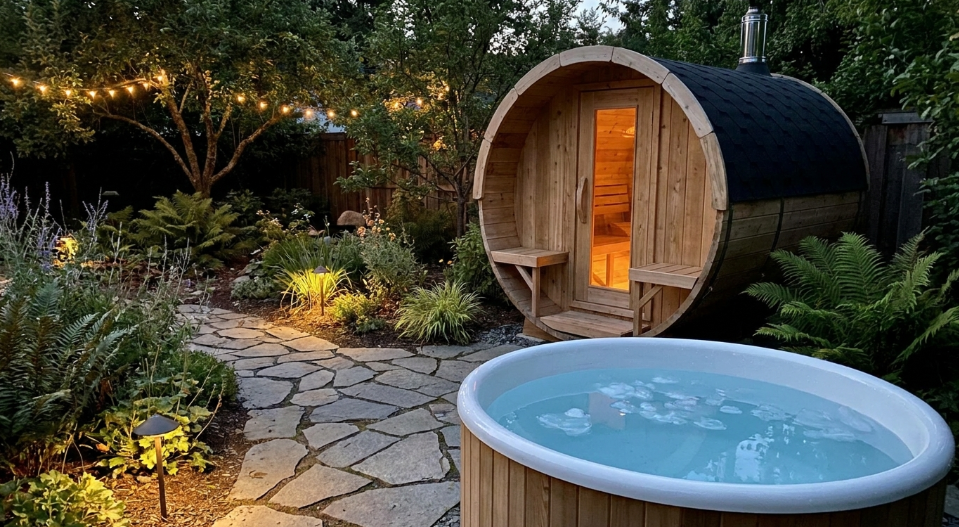
People building a home setup for this usually start with the sauna they already have space and budget for, then add a cold plunge second once the sauna habit is established. Households comparing sauna styles specifically to pair with a cold plunge routine, where recovery time between rounds and quick access between the two units matters, often look at the SweatDecks saunas collection to compare barrel and cabin footprints that sit close to where a plunge tub or stock tank would go, since proximity between the two stations makes the whole routine easier to stick with.
A sample contrast routine for beginners
A common starting pattern is 15 minutes in the sauna, then a cold plunge of 30 to 60 seconds, repeated for two rounds, ending on the cold side. Experienced users often extend to three rounds and longer cold exposures of 2 to 3 minutes as tolerance builds. Hydration matters more in this routine than in either heat or cold alone, since the body is working through two different thermoregulatory demands back to back. Most people find the cycle easier to build up gradually than to start at the long end.
Who should be cautious with this combination
The rapid swing between hot and cold is a real cardiovascular stressor, more so than either extreme on its own. People with unstable angina, a recent heart attack, uncontrolled high blood pressure, or who are pregnant fall into groups where sauna use and cold immersion each carry documented caution, and stacking the two together is not a place to experiment without medical guidance first. For a healthy adult without those risk factors, the combination is generally considered a reasonable, if physically demanding, wellness practice.
Frequently Asked Questions
What is contrast therapy?
Contrast therapy means alternating between heat and cold, typically a sauna session followed by a cold plunge, repeated for two or three rounds. The idea is to push the cardiovascular system through repeated dilation and constriction of blood vessels.
How long should each round of hot and cold last?
A common pattern is 15 to 20 minutes in the sauna followed by 2 to 3 minutes in cold water around 50 to 59°F, repeated for two or three cycles, finishing on cold. Shorter cold exposures of 30 to 60 seconds are also common for beginners.
Does cold plunging after a sauna cancel out the benefits?
Not for cardiovascular or general wellness use. Where cold water may work against you is immediately after a strength training session, where some research suggests it can blunt muscle adaptation. That concern applies to post-lifting recovery, not to a sauna and cold plunge routine on its own.
Is contrast therapy safe for everyone?
The rapid shift between hot and cold puts real stress on the cardiovascular system, so it is not something to try casually if you have unstable angina, a recent heart event, uncontrolled blood pressure, or you are pregnant. Anyone in those categories should talk to a doctor before starting.
Do I need a dedicated cold plunge tub, or is a cold shower enough?
A cold shower or a garden hose can approximate the effect for beginners, but water immersion cools the body faster and more evenly than a shower stream. A dedicated plunge tub or a large stock tank with ice is the more consistent setup once someone is past the trial stage.
References
- Association between sauna bathing and fatal cardiovascular and all-cause mortality events, JAMA Internal Medicine, 2015
- Joint associations of sauna bathing and cardiorespiratory fitness on cardiovascular and all-cause mortality risk: a long-term prospective cohort study, Annals of Medicine, 2018
- Short-term effects of Finnish sauna bathing on blood-based markers of cardiovascular function in non-naive sauna users, Heart and Vessels, 2018
- Effects of cold-water immersion on health and wellbeing: A systematic review and meta-analysis, PLoS One, 2025
- Cold-water immersion (cryotherapy) for preventing and treating muscle soreness after exercise, Cochrane Database of Systematic Reviews, 2012